
Featured
Race Recap #1 by SK Sim Racing: Full iRacing Session Review

The First Time I Fully Trusted VR in Traffic
Affiliate Disclosure:
This article contains affiliate links. If you purchase through these links, SKSimRacing may earn a commission at no additional cost to you. This helps support the site and allows me to continue creating sim racing hardware reviews and VR racing content.
There’s a point in VR sim racing where the headset stops feeling like a piece of hardware and just becomes part of the race.
I think I finally hit that point recently.
Not in a hotlap.
Not in practice.
Not cruising around by myself.
It happened in traffic.
Check out the Pimax Crystal Light & Crystal Super here:
https://pimax.com/?ref=sksimracing&utm_campaign=affiliate_promotions&utm_medium=affiliate&utm_source=goaffpro
Where This Fits in My SKSimRacing VR Journey
If you’ve followed my VR coverage on SKSimRacing, you know I’ve spent a lot of time trying to answer one question:
Does VR actually make you a better, more confident sim racer over time?
Not just:
- “Does it look cool?”
- “Is it immersive?”
- “Are the specs impressive?”
But:
- Does it improve racecraft?
- Does it help in traffic?
- Does it make you trust what you’re seeing?
That’s what this new series is going to focus on.
Not technical breakdowns.
Not corporate feature lists.
Just real racing experiences and the little moments where VR changes how you drive.
Before reading further, you may also want to check out:
My Crystal Light Performance Review for iRacing Click Here
VR vs Triple Screens for Sim Racing Click Here
Latest Pimax VR News & Coverage Click Here
The Race Where VR Finally “Clicked”
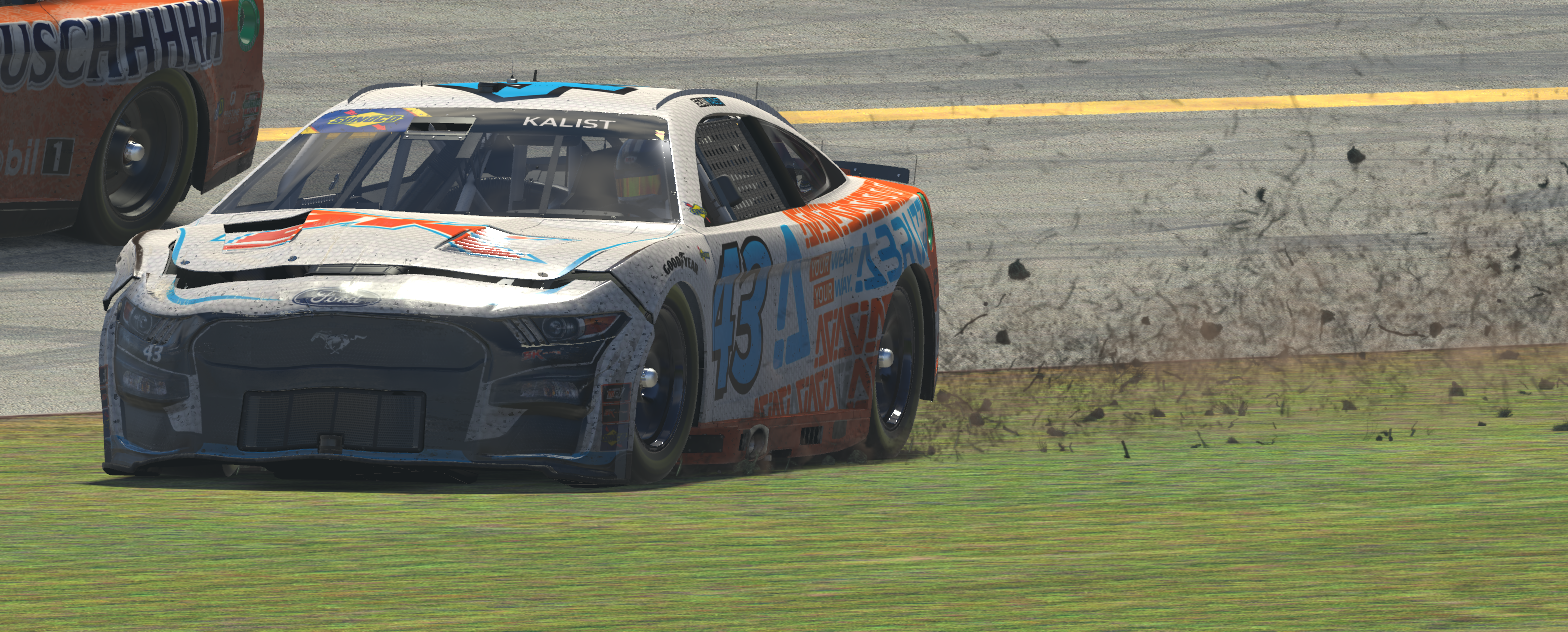
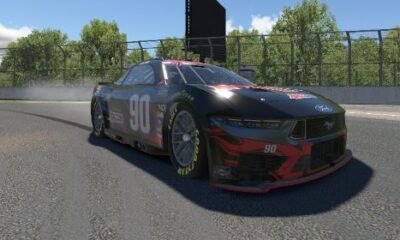
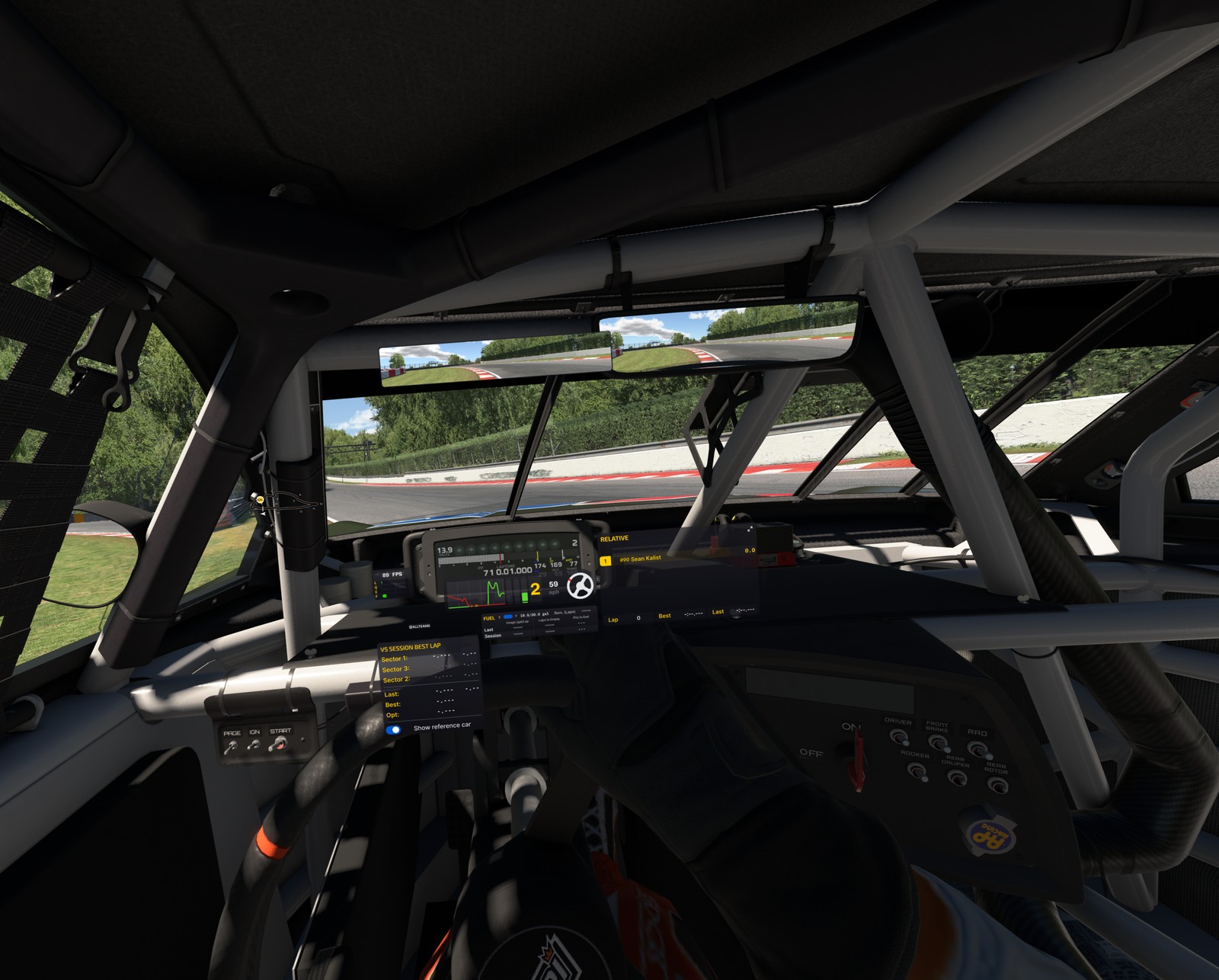
The race itself honestly wasn’t anything special on paper.
NASCAR Next Gen.
Long run.
Heavy traffic.
The kind of race where you spend most of your time inches away from disaster.
But somewhere during the middle portion of the race, I realized I was driving differently than I normally would.
More committed.
More confident.
And honestly… more aggressive.
Turn 1 Traffic Felt Different
Usually in tight traffic, especially on restarts, there’s always that hesitation.
You’re trying to judge:
- overlap
- depth
- spacing
- who’s checking up ahead
On triples or older VR headsets, there’s always a tiny bit of uncertainty.
But during this race, I noticed something weird:
I stopped second-guessing the space around me.
Not because I suddenly became a better driver overnight, but because the depth perception felt natural enough that my brain trusted it.
That sounds small, but it changes everything.
The Moment That Stood Out Most
The biggest moment came entering a braking zone battling side-by-side.
Normally, I probably would have backed out early.
Instead, I committed harder than usual because I could clearly judge:
- the angle of the other car
- my corner entry
- where the apex was developing
And the crazy part was:
it didn’t feel risky.
It just felt… obvious.
That was probably the first moment where I fully understood why people become so attached to racing in VR.
Distance Clarity Changed More Than I Expected
One thing that’s grown on me over time with the Pimax Crystal Light is how much the distance clarity affects confidence.
Not just immersion.
Confidence.
Being able to:
- spot braking markers earlier
- read corner shapes sooner
- identify cars ahead more clearly
changes how aggressively you attack corners.
Especially in iRacing, where hesitation usually costs time.
See the Crystal Light here:
https://pimax.com/?ref=sksimracing&utm_campaign=affiliate_promotions&utm_medium=affiliate&utm_source=goaffpro
Tracks with long sightlines really highlight this.
You stop reacting late and start planning earlier.
That’s a huge difference.
The Surprising Thing I Didn’t Expect
Honestly, the biggest surprise wasn’t the visuals.
It was how quickly I stopped thinking about the headset entirely.
That’s something people don’t talk about enough with VR.
The best VR moments are when:
- you stop noticing the hardware
- you stop analyzing settings
- you stop “testing”
…and just race.
During longer sessions, the headset simply faded into the background and I focused entirely on driving.
That’s probably the highest compliment I can give it.
Why I’m Still Leaning Toward Crystal Light Over Crystal Super
After spending time with the Crystal Light, I still personally lean toward it for competitive iRacing.
Not because the Crystal Super isn’t impressive.
But because the Crystal Light feels like the sweet spot between:
- clarity
- refresh rate
- stability
- system demand
For my style of racing, consistent performance matters more than chasing the absolute widest field of view possible.
The Crystal Light just feels balanced.
Especially in longer races where stable frame pacing matters more than raw wow-factor.
New Pimax Promotion — Honestly One of Their Best Yet
Right now Pimax is running a promotion that actually makes a lot of sense for sim racers considering the jump to VR.
When purchasing a Crystal Light or Crystal Super:
Select the accessory bundle option
Use code SKSIMRACING
Receive an extra 2% discount
Get a FREE accessory package valued at $150
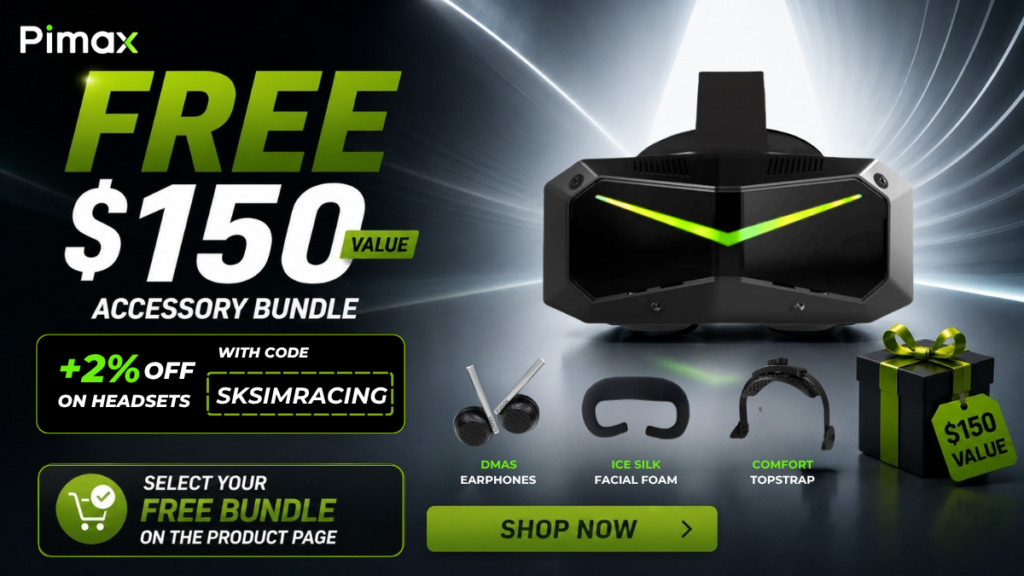
For Crystal Super users, total savings can reach around $181.
Check the promotion here:
https://pimax.com/?ref=sksimracing&utm_campaign=affiliate_promotions&utm_medium=affiliate&utm_source=goaffpro
From what I’ve heard, this has actually been one of Pimax’s strongest-performing promotions this year.
And honestly, if someone has been waiting for a lower-risk time to try high-end VR for iRacing, this is probably one of the better opportunities.
The campaign runs through the end of the month.
VR Doesn’t Just Change Immersion — It Changes Decision Making
That’s probably the biggest takeaway I’ve had so far.
At first, VR feels like:
“Wow, this is immersive.”
But over time, it becomes:
“Wow, I’m actually driving differently.”
You trust:
- spacing
- depth
- traffic
- braking zones
in a way that gradually changes your racecraft.
And I think that’s what finally clicked for me during this race.
Final Thoughts from SKSimRacing
This race probably won’t be remembered as my cleanest or fastest race.
But it might be the race where VR finally stopped feeling like technology and started feeling natural.
That’s a pretty big moment as a sim racer.
And honestly, it makes me excited to keep pushing this series further.
Check out the current Pimax Crystal Light & Crystal Super promotion here:
https://pimax.com/?ref=sksimracing&utm_campaign=affiliate_promotions&utm_medium=affiliate&utm_source=goaffpro
Use code: SKSIMRACING
Affiliate Disclosure
Some links in this article are affiliate links, which means SKSimRacing may earn a commission if you purchase through them at no additional cost to you. These partnerships help support the site and allow me to continue creating sim racing hardware reviews, VR testing, and racing content. All opinions are based on my own real-world experience using the products in sim racing environments.




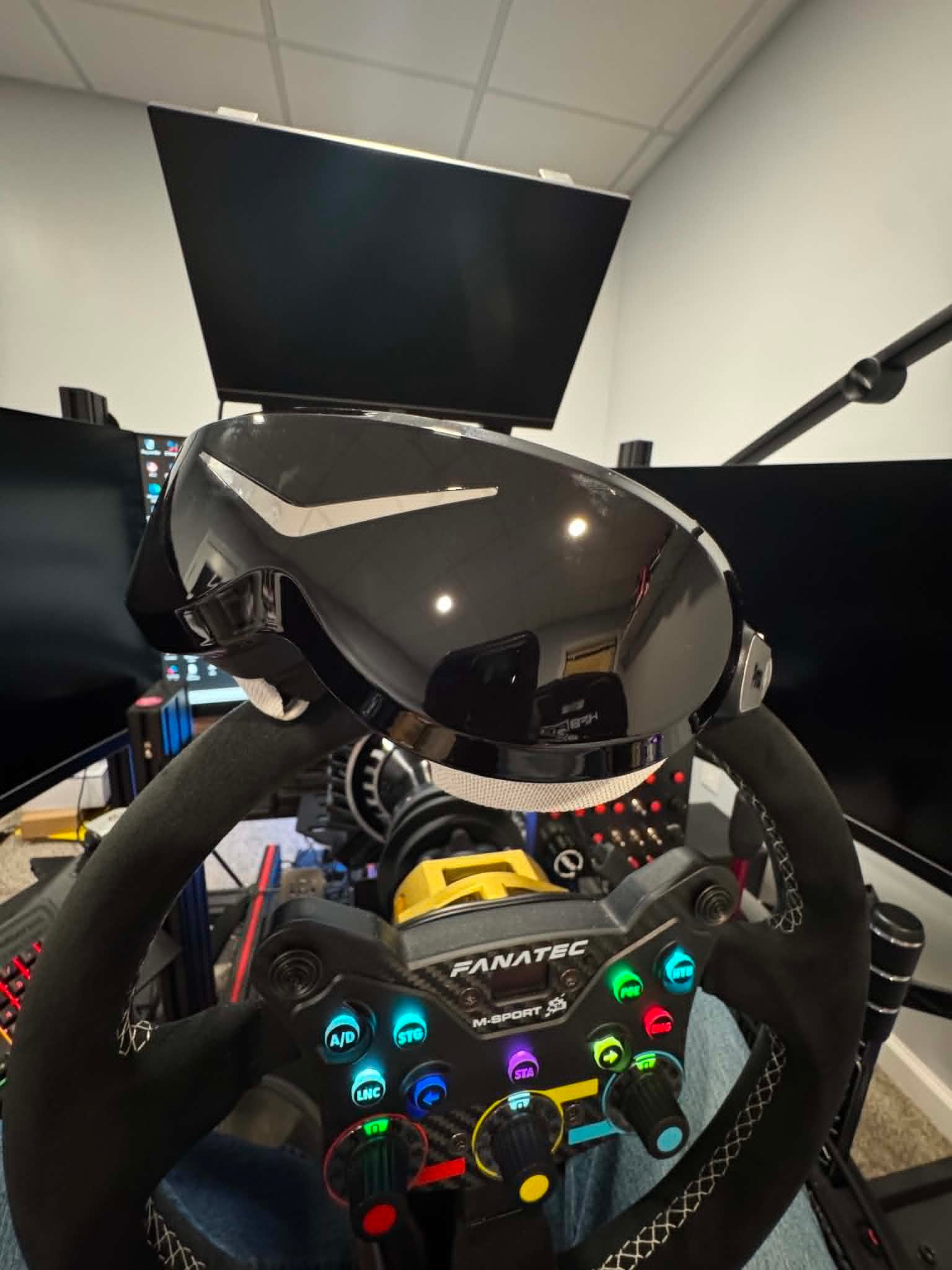
I noticed something recently.
Since getting the Pimax Dream Air, I haven’t wanted to use a monitor for iRacing.
What’s interesting is that I never made a conscious decision to switch completely to VR. It just happened. Every time I sat down to race, I reached for the Dream Air. After a few weeks, I realized the monitor was no longer part of the decision at all.
That surprised me.
For years, VR has offered a level of immersion that monitors simply can’t match. But monitors were usually easier to live with. They were more comfortable for long sessions, you could see your wheel and button boxes, and you didn’t have to wear a headset for hours at a time.
The Dream Air doesn’t eliminate every downside of VR.
What it does do is remove enough of them that I no longer find myself deciding between VR and a monitor. I just race in VR.
To me, that’s far more significant than any spec-sheet upgrade.
The Real Problem With VR Was Never Immersion
VR has always had one major advantage over monitors: depth perception.
You can judge distances more naturally, place your car with greater confidence, and look through corners the same way you would in a real car. It gives you a sense of space that even the best triple-screen setup can’t fully recreate.
The problem was everything else.
Previous generations of headsets often came with compromises. Some lacked clarity in the distance, others had a small sweet spot in the lenses, and many became tiring during longer races. The usual solution was to add bigger displays and better optics, which often resulted in larger and heavier headsets.
That trade-off mattered.
A headset could feel incredible for thirty minutes, then leave you wanting to take it off before the race was over.
What makes the Dream Air stand out is that it tackles both image quality and comfort at the same time.
Why Dream Air Changed It for Me
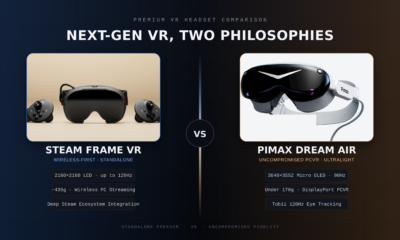
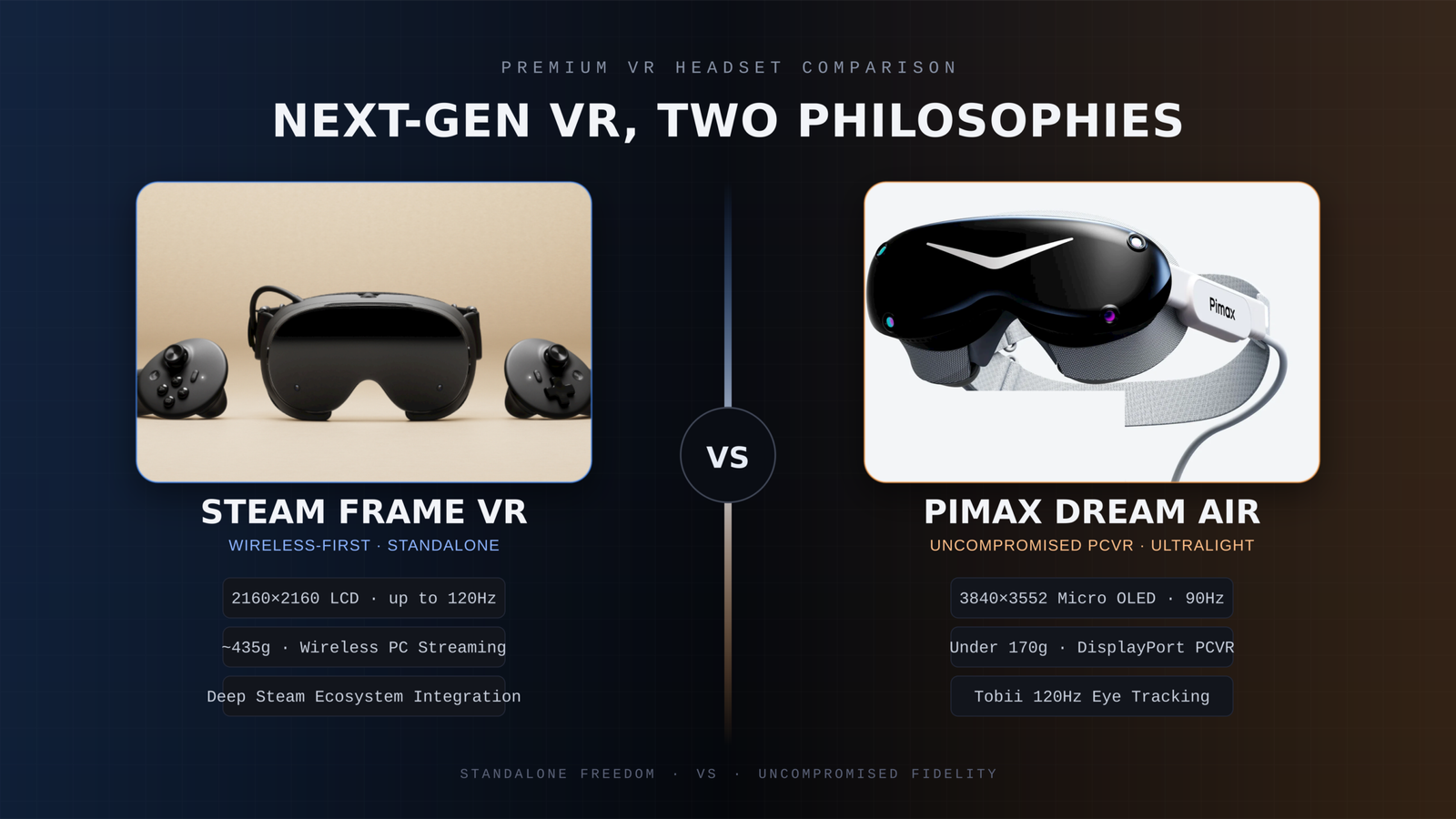
The Dream Air combines Micro OLED displays with a resolution of 3840 × 3552 pixels per eye, eye tracking, automatic IPD adjustment, dynamic foveated rendering, and a DisplayPort connection for PCVR.
Those specifications are impressive, but they’re not what changed my experience.
What I notice every time I use the headset is the combination of clarity and weight.
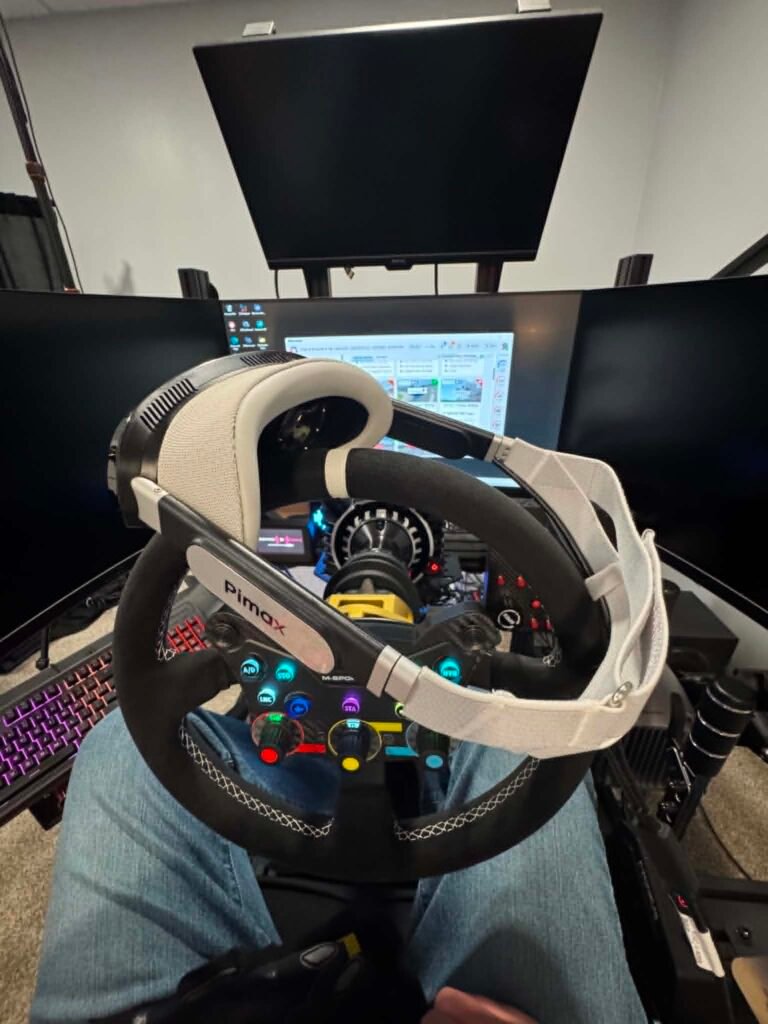
At roughly 170 grams, the Dream Air feels dramatically different from a traditional high-end VR headset. There’s less pressure on your face, less movement when turning your head, and far less fatigue during long sessions.
The image quality matters just as much.
Distant cars are easier to identify. Braking markers stay clear. Cockpit details remain sharp. Instead of searching for visual information, it simply feels like it’s there.
More importantly, that combination changed my behavior.
I never decided to pause using my triple screen setup. I simply kept choosing the Dream Air every time I launched iRacing.
Why Weight Matters More Than People Think
Weight is one of those specs that’s easy to overlook.
To be clear, I’m not saying headsets like the Pimax Crystal Light or Pimax Crystal Super are uncomfortable. They’re outstanding headsets, particularly when it comes to image quality.
But compared with the Dream Air, they’re significantly larger and heavier, and during a long race that difference becomes increasingly noticeable.
The same applies to headsets like the Quest 3.
Weight may seem insignificant during the first few minutes. After an hour or two of racing, it becomes part of the experience. You’re braking hard, fighting the wheel, moving in the seat, and constantly making small head movements. A heavier headset makes all of those movements feel more noticeable.
A lighter headset doesn’t eliminate every limitation of VR, but it can make long sessions far easier and more enjoyable.
That’s where the Dream Air feels different.
The Crystal Light and Crystal Super focus heavily on delivering exceptional visual performance. The Dream Air takes a different approach by prioritizing a compact, lightweight design while still delivering a premium image.
For sim racing, I’ve come to value that more than I expected.
What About Field of View?
The Dream Air doesn’t have the widest field of view available.
Its horizontal field of view sits at around 110 degrees.
Initially, I expected that to bother me. In practice, it hasn’t.
I actually prefer the balance. The image remains sharp, performance is easier to manage, and I still get the sense of depth and spatial awareness that makes VR so compelling.
For sim racing, a wider field of view is certainly beneficial.
But it isn’t everything.
A larger image means very little if achieving it requires sacrificing clarity or frame rate.
A Headset You Actually Want to Use
The Dream Air SLAM version includes inside-out tracking, eye tracking, dynamic foveated rendering, hand tracking, passthrough, integrated audio, and 6DoF controllers.
Features are important, but convenience is what stands out to me.
Like most PCVR headsets, there’s some initial setup involved. Once that’s done, the experience becomes remarkably simple. I sit down, put on the headset, launch iRacing, and start racing.
Pimax Play helps here as well. Most settings and controls are centralized in one place, so I rarely have to think about the headset itself once everything has been configured.
That may sound like a small thing, but it matters.
If using a headset feels like work every time you want to race, you’ll naturally use it less. The best VR headset isn’t necessarily the one with the most impressive specifications. It’s the one you genuinely want to put on.
Triple Screens Still Have Advantages
Traditional monitors still do some things better.
You can see your wheel, keyboard, button boxes, and other hardware. Managing Discord, desktop applications, race management tools, and quick adjustments is often easier on a monitor setup.
VR also demands a capable PC if you want high resolution and consistent performance.
So this isn’t a story about monitors suddenly becoming obsolete.
It’s about the reasons for going back to them becoming less convincing.
Who Is Dream Air For?
The Dream Air makes the most sense for people who love the idea of VR but have always disliked the compromises.
Maybe your previous headset felt too heavy.
Maybe image clarity wasn’t where you wanted it to be.
Maybe you liked the lightweight approach of something like the Bigscreen Beyond but wanted more built-in functionality.
That’s where the Dream Air becomes genuinely interesting.
It isn’t just about adding more features or better specifications. It’s about removing enough friction that VR stops feeling like something you occasionally use for special occasions.
Instead, it becomes your default way to race.
This post contains affiliate links. If you purchase through them, I may earn a commission at no extra cost to you.
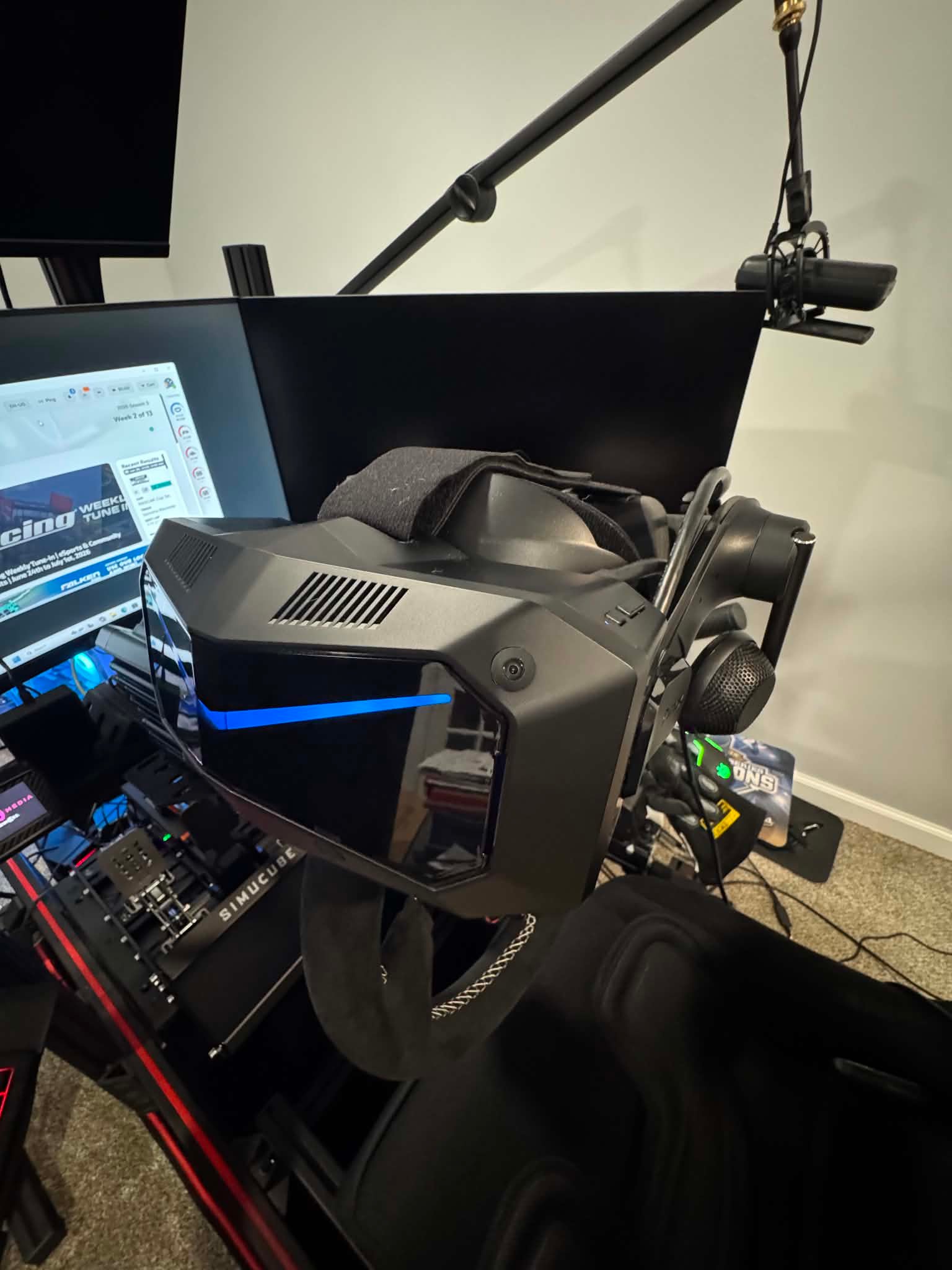
When upgrading a sim racing setup, choosing the right VR headset is only part of the decision. Knowing whether the headset you want is actually in stock and ready to ship can matter just as much, especially when you are planning the rest of a new racing rig around it.
Pimax has now launched a new Shipping Status page where buyers can check regional stock, estimated fulfillment times, shipping costs and tax information before placing an order.
The page is updated weekly, making it easier to check the latest situation in your region rather than relying on a general shipping estimate.
Check the exact headset you want before ordering
The page covers Pimax’s current PCVR lineup, including the Crystal Light, Crystal Super series and Dream Air.
Importantly, availability is shown by individual configuration. For the Crystal Super, for example, the 50PPD, 57PPD, Ultrawide and 8K OLED versions are listed separately.
That is useful for sim racers because these models offer very different approaches to VR racing. Whether you are prioritizing maximum clarity, a wider field of view or a lighter headset for longer sessions, you can check whether the exact version you want is currently available in your market.
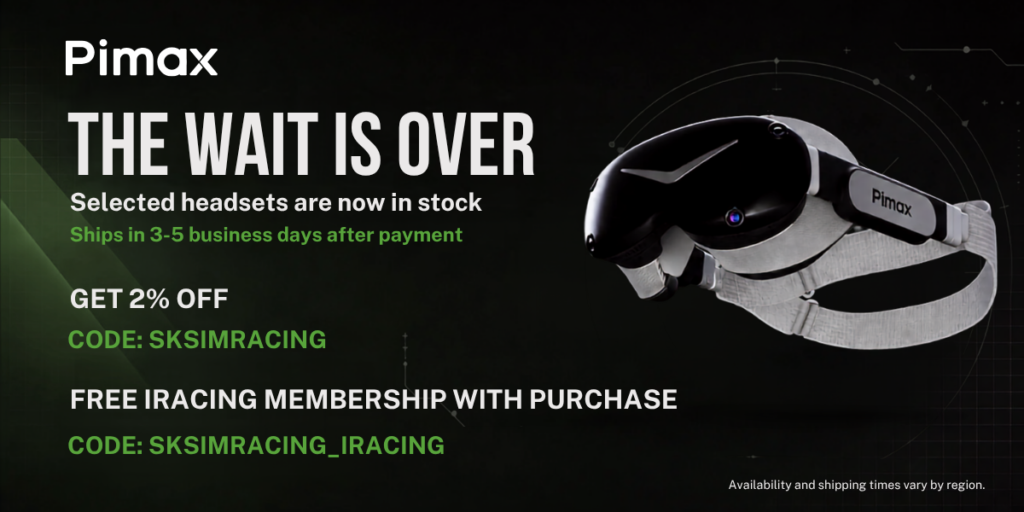
When a product is available in regional inventory, Pimax currently estimates fulfillment within 3 to 5 business days after payment.
Actual delivery time will still depend on your location and local carrier.
[Insert Image 2: Pimax headset or Crystal Super shown in a sim racing / iRacing setup]
Which warehouse your order ships from
Pimax also shows which warehouse serves each supported region.
Major markets including the United States, Canada, the UK, Australia, Japan, Mexico and the European Union are supported by local or nearby warehouses, while some other regions continue to be fulfilled from China.
This gives sim racers a better idea of where their headset will ship from and why delivery times may differ between markets.
Shipping fees and taxes
Shipping fees and tax handling are also listed by region, giving buyers a clearer picture of the total cost before reaching checkout.
For anyone planning to move into VR for iRacing, upgrade from an existing headset, or build a new dedicated racing cockpit, the new page makes it easier to plan the purchase before ordering.
Check the latest Pimax stock and shipping information here:
https://pimax.com/pages/shipping-status?ref=sksimracing
An extra iRacing bonus for SKSimRacing readers
There is also an additional offer aimed specifically at sim racers.
With a qualifying Pimax purchase, use code SKSIMRACING_IRACING to receive a free 12-month iRacing membership.
The offer is available to both new and existing iRacing users, making it useful whether you are just getting started or already racing regularly.
For the standard Pimax discount, SKSimRacing readers can also use code SKSIMRACING for 2% off eligible Pimax products.
Affiliate Disclosure: This article contains affiliate links. If you purchase through these links, SKSimRacing may earn a commission at no additional cost to you. Those commissions help support the reviews, testing, and content I create here on SKSimRacing.
-
 Featured4 years ago
Rev Up Your Sim Racing Experience with SK Sim Racing: Discover High-Quality Sim Wheels, Pedals, Shifters & More – Exclusive Discounts and Offers Await!
-
 Products4 years ago
Boost Your Sim Racing Experience with Exclusive Deals from Fanatec, Digital-Motorsports, Demon-Tweeks, Ricmotech & Trak Racer
-
 Featured5 years ago
Rev Up with The Oval Wheel: Unleash the Thrill of Racing
-
 Featured3 years ago
Fanatec Sim Racing Wheel Ultimate Buyer’s Guide 2024-2025
-
 Sim Racing3 years ago
Experience the Thrill of Virtual Racing: Unlocking the Exciting World of Sim Racing and Beyond!
-
 Featured6 years ago
New Rig Build
-
 Featured6 years ago
Fanatec CSL Elite Steering Wheel McLaren GT3 V2
-
 Products6 years ago
Sim Racing Gloves