
The Most Surprising Thing About the Pimax Dream Air Isn’t the Resolution
When Pimax announced the Dream Air, most of the conversation focused on the specifications.
4K micro-OLED displays.
Eye tracking.
Motorized IPD adjustment.
Lighthouse tracking.
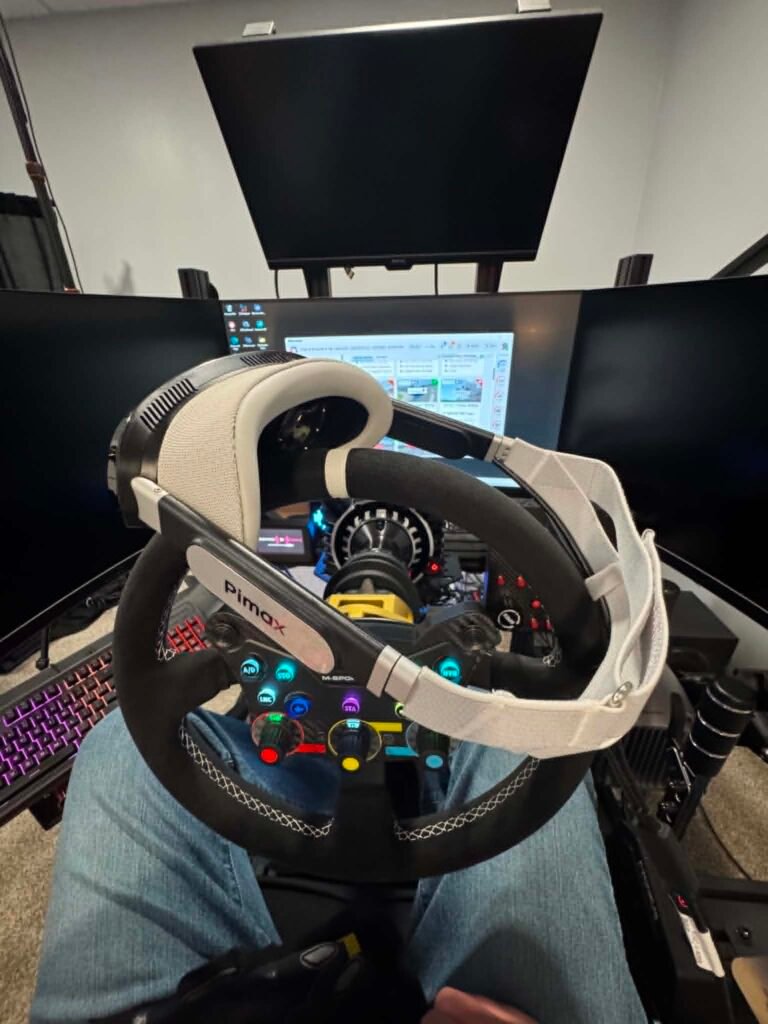
A headset weighing under 170 grams — lighter than many bananas.
That last detail sounds almost like a throwaway spec, but it’s actually one of the most striking things about the headset when you experience it.
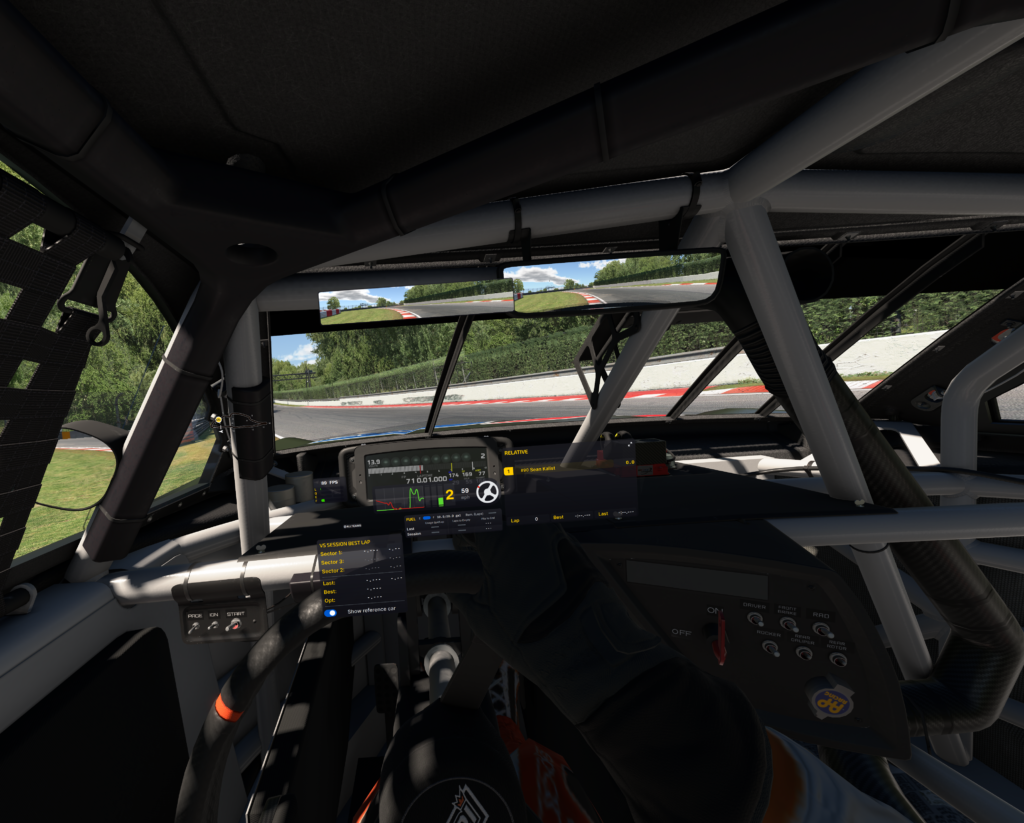
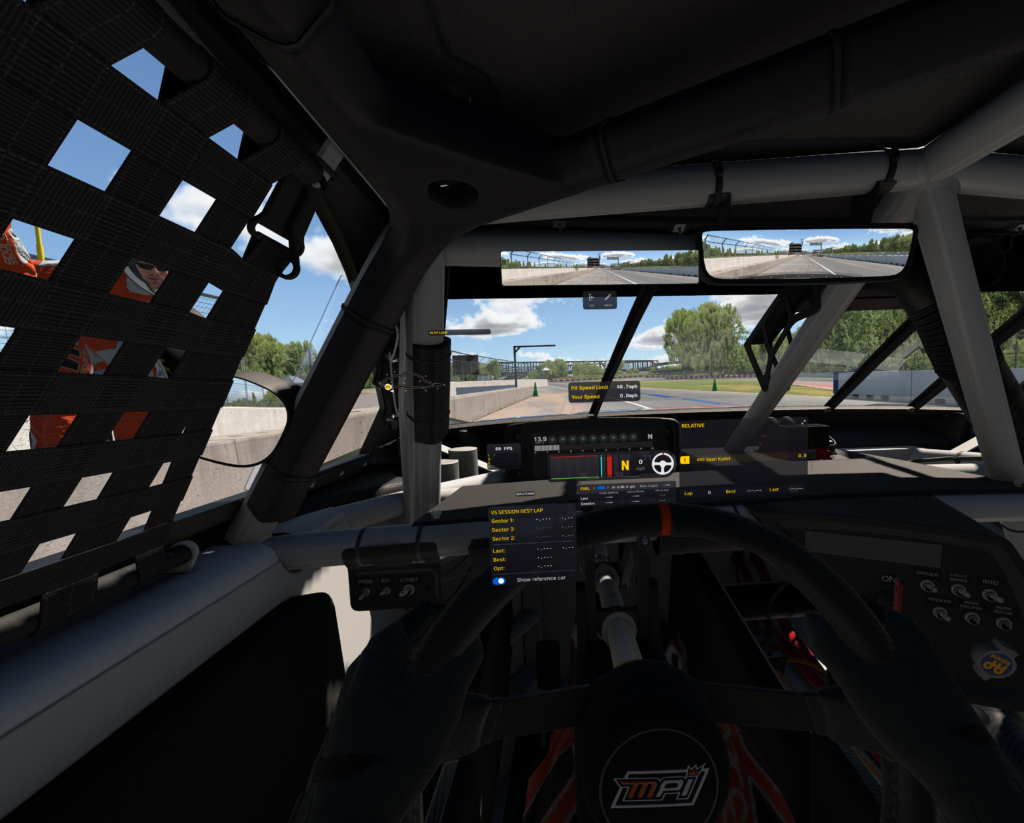
Those are impressive specs, but after spending roughly three hours racing with the Lighthouse version of the Dream Air in iRacing at EchoPark Speedway in the NASCAR Cup Series, I came away thinking about something completely different.
I think lightweight VR may be one of the most important advantages for endurance racing.
Not because it sounds good on a marketing slide.
Because I experienced it.
👉 Learn more about the Dream Air:
https://pimax.com/pages/dream-air?ref=sksimracing&utm_campaign=affiliate_promotions&utm_medium=affiliate&utm_source=goaffpro


We Talk About Resolution Too Much
As sim racers, we tend to focus on the easy things to measure.
Resolution.
Refresh rate.
Field of view.
Pixel density.
Those things absolutely matter.
But after years of VR development, most premium headsets have reached a point where visuals are already very strong. That shifts the conversation toward something else:
How does the headset feel after two hours?
Not two minutes.
Not a demo.
Not a hotlap.
A real race.
Because endurance racing exposes every weakness in a headset.
The Headset Started Disappearing
The biggest thing I noticed during my first night with the Dream Air wasn’t visual quality.
It was that I stopped noticing the headset.
That sounds strange, but VR veterans will understand exactly what I mean.
Every headset creates some level of awareness:
- pressure on your face
- neck fatigue
- forehead pressure
- weight shifting during head movement
You may not consciously think about it, but your brain is constantly processing it.
Three hours into my session, I realized I wasn’t thinking about the headset anymore.
I was thinking about racing.
That’s a huge distinction.
Why This Matters in NASCAR
EchoPark Speedway is not an oval where you are chasing braking points.
It’s a place where:
- traffic develops quickly
- positioning matters
- focus matters
- mistakes compound
The longer the run went, the more I appreciated the reduced weight.
Not because my neck hurt with other headsets.
But because there was simply less effort required.
Less headset awareness.
Less adjustment.
Less distraction.
That mental energy stays available for racing decisions instead.

The Unexpected Benefit: Mental Fatigue
This is something I rarely hear discussed in VR reviews.
Physical fatigue is obvious.
Mental fatigue is harder to identify.
Yet I think it’s just as important.
When you’re wearing a heavier headset, there’s a constant low-level reminder that you’re wearing equipment.
The Dream Air reduced that dramatically.
The headset became background noise.
And when the hardware fades away, immersion actually increases.
Traffic Felt Natural
One thing I’ve written about before with the Crystal Light is how VR improves confidence in traffic.
The Dream Air continued that trend.
Several times during the race I found myself running closer to competitors than I probably would on a traditional monitor setup.
Not because I was taking more risks.
Because I trusted what I was seeing.
Depth perception remains one of VR’s greatest strengths.
The Dream Air simply delivers it in a package that feels nearly effortless to wear.

The Visuals Are Every Bit as Good as Advertised
Let’s talk visuals for a moment.
Because they are outstanding.
The dual 4K micro-OLED displays deliver:
- exceptional sharpness
- strong contrast
- deep blacks
- excellent color reproduction
What stood out most was how clean everything looked.
Braking references.
Trackside objects.
Cars ahead.
Dashboard information.
Everything felt crisp and easy to focus on.
Based on my initial testing, the visual quality is clearly among the best I’ve experienced in VR so far.
Lightweight Without Compromise
What makes the Dream Air particularly interesting is that it doesn’t achieve its low weight by stripping features away.
At under 170g, it’s lighter than many bananas — yet it still includes:
- dual 4K micro-OLED displays
- eye tracking
- motorized IPD adjustment
- integrated audio
- Lighthouse tracking
That combination is unusual.
If you look at something like the Bigscreen Beyond 2, it’s also extremely lightweight and clearly designed with comfort in mind. But the Dream Air takes a different approach — delivering that same ultra-light feel while also packing in a broader set of high-end features.
That balance is what makes it stand out.
Lighthouse Tracking Remains My Preferred Setup
For sim racing, Lighthouse tracking continues to be my preferred solution.
Once the base stations are installed, they simply work.
The Dream Air Lighthouse version integrated easily into my existing setup.
For cockpit users, that’s a major advantage.
No extra setup every race night.
Just sit down and drive.
Could Lightweight Become More Important Than FOV?
This was the question I kept asking myself after the session.
For years the industry has chased:
- wider FOV
- more resolution
- more brightness
Those improvements are great.
But what if the next major leap isn’t purely visual?
What if it’s comfort?
What if the biggest upgrade is simply forgetting you’re wearing a headset?
After my first few hours with the Dream Air, I think that’s a very real possibility.
The Endurance Racing Test Still Awaits
Three hours is a great first impression.
But it’s not the final verdict.
The real test will come during:
- longer NASCAR races
- endurance events
- multi-hour practice sessions
- league racing
That’s where lightweight design should shine even more.
And honestly, that’s what I’m most excited to test next.
First Impressions: Extremely Promising
It’s still early.
I need significantly more seat time before making any final conclusions.
But my first takeaway is simple:
The Dream Air’s greatest strength may not be the displays.
It may not be the eye tracking.
It may not even be the motorized IPD.
It may be the fact that after several hours of racing, I largely forgot it was there.
And for endurance racing, that could be one of the most important advantages a VR headset can offer.
👉 Learn more about the Pimax Dream Air:
https://pimax.com/pages/dream-air?ref=sksimracing&utm_campaign=affiliate_promotions&utm_medium=affiliate&utm_source=goaffpro
What’s Next?
I’m planning additional testing with:
- Longer NASCAR events
- Road course racing
- Heavy traffic situations
- Extended endurance sessions
I’m particularly interested in seeing whether the reduced weight continues to provide advantages after four, five, or even six hours in the cockpit.
If the first three hours are any indication, Pimax may be onto something important—not just improving specs, but improving how VR feels over time.
Affiliate Disclosure: This article contains affiliate links. If you purchase through these links, SKSimRacing may earn a commission at no additional cost to you.
Media Disclosure: SKSimRacing has permission from Pimax to use product images and promotional materials featured in this article.